
Blog
The Sioux Half-Breed Descendants' Landmark Lawsuit Against the U.S. Government
On October 13, 2025, Sioux half-breed descendants filed a class action in the U.S. Court of Federal Claims seeking at least $5 billion and federal recognition.
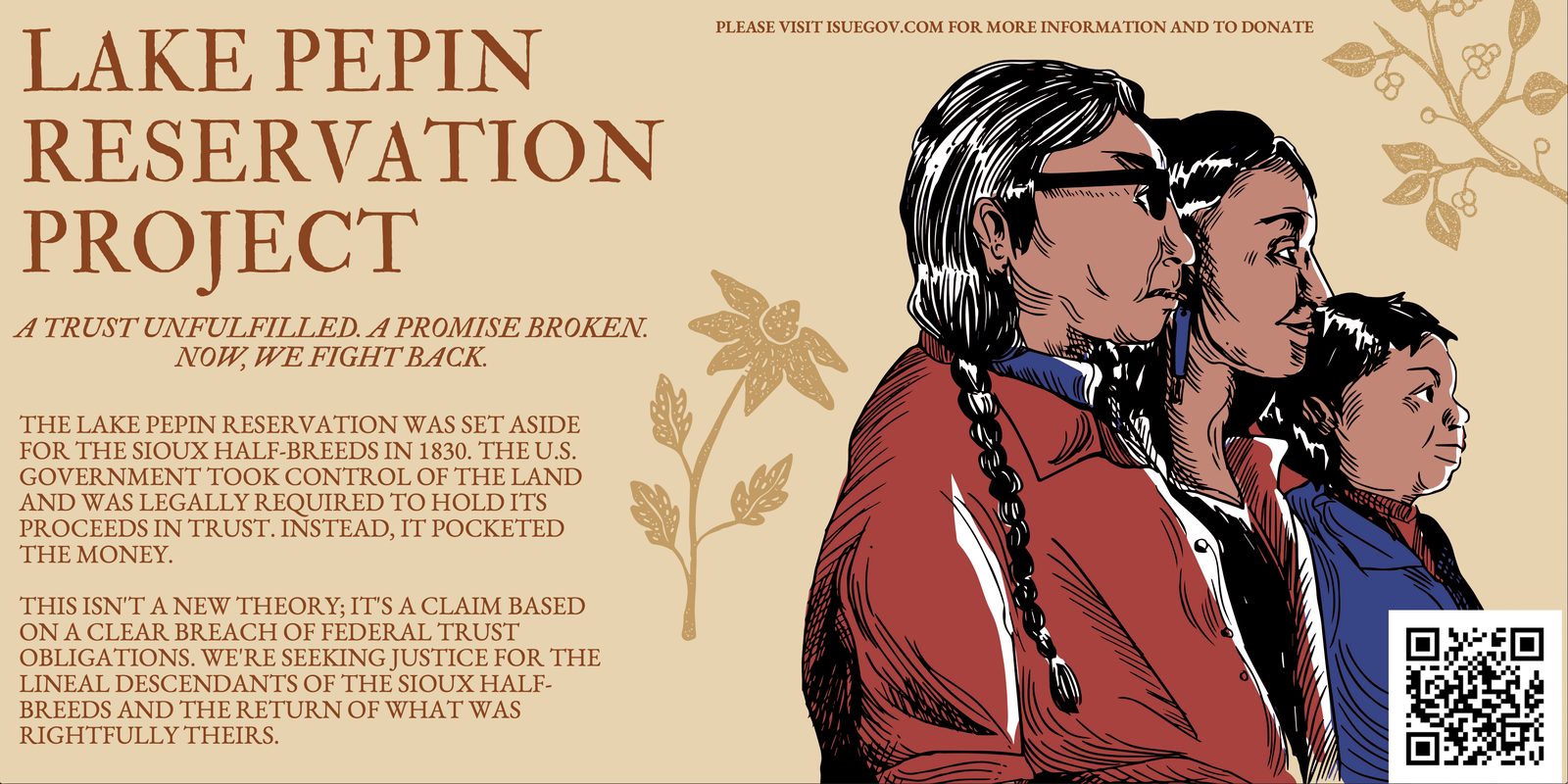
On October 13, 2025, descendants of the Sioux “half-breeds” filed a class action against the United States in the U.S. Court of Federal Claims. They seek at least $5 billion and official status as a federally recognized tribe. The project page is Lake Pepin Reservation.
The case rests on the Treaty of July 15, 1830, and on federal laws in 1854 and 1858, which established rights and land for Sioux half-breed lineal descendants. It focuses on the Lake Pepin Reservation, described as about 500 square miles in southeastern Minnesota. The plaintiffs argue the United States held those lands in trust and failed that duty, and that the failure ended in the loss of the reservation.
Claims
Three accusations:
- Breach of trust. Federal Indian law places a trust responsibility on the United States. The plaintiffs allege mismanagement and loss of the Lake Pepin Reservation.
- Unlawful taking. The Fifth Amendment bars taking private property for public use without just compensation. The suit contends the loss of the reservation was an uncompensated taking.
- Unjust enrichment. the government benefited from lands and resources it wrongfully controlled and should return those gains.
The money demand is at least $5 billion for generations of economic and cultural losses. It also says the plaintiffs want two orders aimed at the executive branch:
- A modern census: the President and the Secretary of the Interior identify and count living Sioux half-breed lineal descendants who are beneficiaries of the original treaty.
- Federal tribal recognition: the Secretary of the Interior recognize the descendants as a tribe under the Federally Recognized Indian Tribe List Act of 1994.
Recognition is a government-to-government relationship, with access to federal programs for healthcare, education, and housing, and with affirmed sovereignty.
What comes next
Erick G. Kaardal, identified as legal counsel for the plaintiffs, is quoted calling the lawsuit a “necessary and peaceful step toward securing the historical justice and federal recognition” the descendants believe they are owed.
The Court of Federal Claims hears monetary claims against the United States. The case will turn on historical records, treaties, and federal policy. A win could matter to other groups with treaty claims.
This note is general information, not legal advice, and reading it does not form an attorney-client relationship.
A gift is a donation to Five Stones Legal Defense Fund. Publishing a post does not create an attorney-client relationship, and no legal outcome is guaranteed.